Service
New Construction Spray Foam Insulation
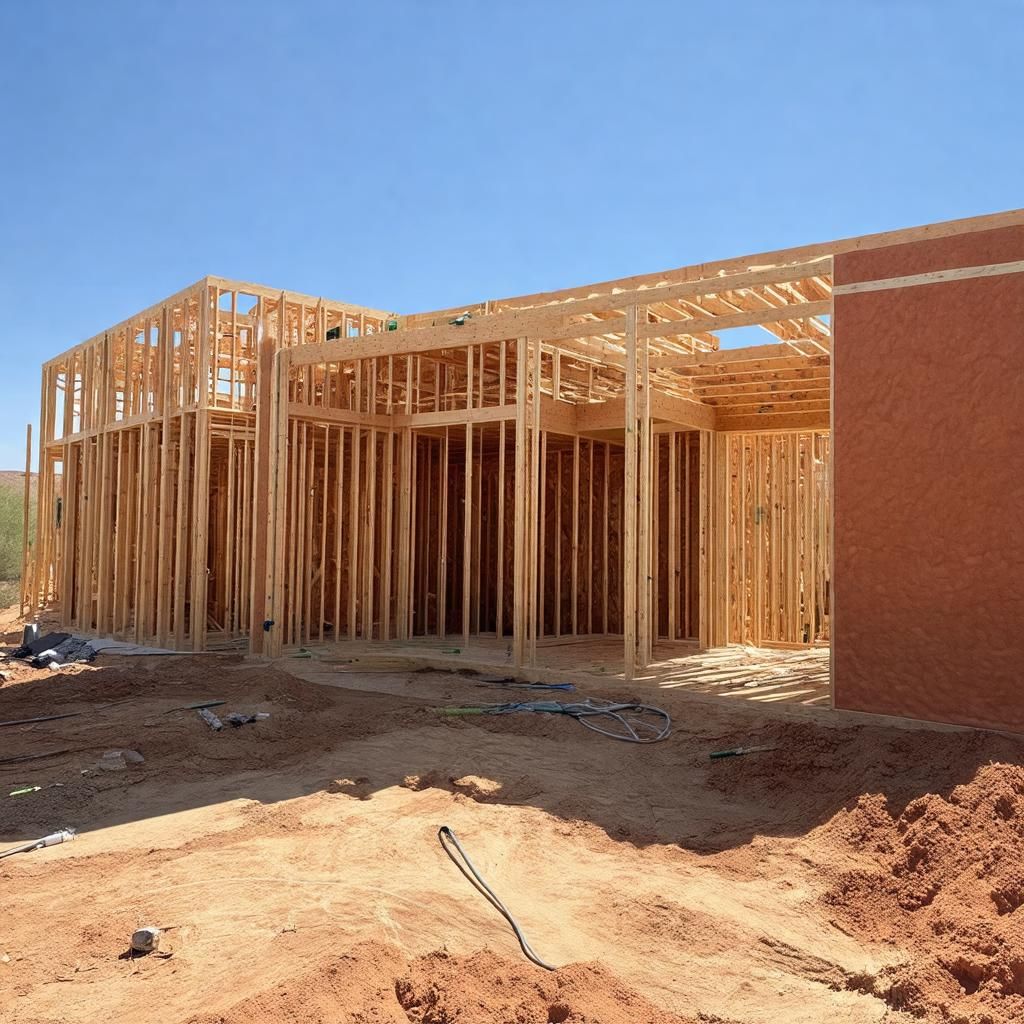
Insulating during new construction is a fundamentally different opportunity than retrofitting an existing home — the framing is open, every cavity is fully accessible, and there's no existing insulation, ductwork clutter, or finished drywall to work around. For builders and homeowners building new in the St. George area and across the Zion gateway region, that access is the chance to get the building envelope right from the start instead of upgrading it years later.
Why New Construction Is the Best Time to Install Spray Foam
Retrofitting spray foam into an existing home means working around finished walls, existing electrical and plumbing runs, and limited access to some cavities — all solvable, but all adding time and cost compared to installing into open framing. New construction removes those constraints entirely. Every wall cavity, roofline, and rim joist is fully accessible, which means more complete, more consistent coverage and a genuinely continuous air barrier across the whole building envelope, not just the areas that were easiest to reach in a retrofit.
Working With Builders
We work directly with builders and general contractors on new-construction projects, coordinating our stage of the build with framing, rough electrical and plumbing, and pre-drywall inspections. Spray foam insulation typically goes in after rough-in is complete and inspected but before drywall, which means scheduling matters — we coordinate directly with your build timeline rather than requiring you to work around ours. If you're a builder managing multiple projects or phases, we can also discuss a standing arrangement for insulation across your build schedule rather than quoting each project one at a time.
What Homeowners Building New Should Know
If you're building a custom home and choosing your own insulation rather than going with whatever your builder defaults to, spray foam is worth strong consideration specifically because of southern Utah's climate — the same air-sealing and dual-direction thermal performance that makes it valuable in a retrofit matters even more when you're deciding how to build the envelope from scratch. It's also worth discussing with your builder or architect early, since spray foam's rigidity and the way it seals cavities can affect certain framing and mechanical decisions that are much easier to design around from the start than to retrofit later.
Open-Cell, Closed-Cell, or a Hybrid Approach
New construction gives us the flexibility to design the insulation system to the building rather than working within an existing structure's constraints. That often means a hybrid approach — closed-cell foam in areas that benefit most from its higher R-value and moisture resistance (roofline, below-grade, or exterior-facing walls), open-cell foam in interior applications where sound dampening matters more than moisture resistance, and attention to how the whole system works together as a continuous envelope rather than treating each area in isolation.
What to Expect on Installation Day
New construction projects are quoted based on square footage and the specific insulation plan for the building — which areas get closed-cell, which get open-cell, and any additional considerations for conditioned attics or unusual framing. We coordinate with your builder's schedule and typically complete the insulation stage within the timeline allotted before drywall begins, minimizing any impact to the overall build schedule.
Frequently Asked Questions
Related Services
Ready to Get Your Free Quote?
Tell us about your property and we'll put together a straightforward estimate — no hidden fees, no pressure.